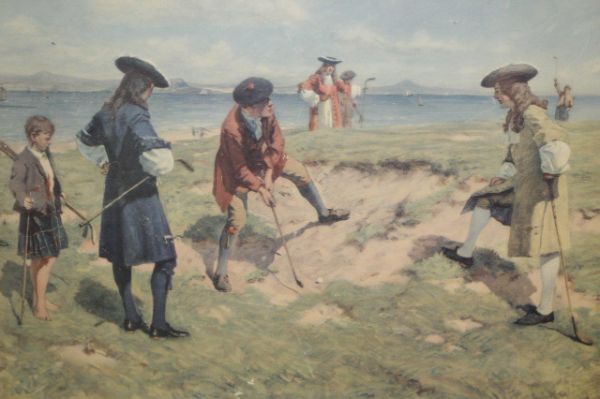
In 1681, James, Duke of York, who would later become King James II, played an integral role in the first international match.
As legend has it, the Duke was an avid golfer and would often be seen on Leith Links in Edinburgh.
Apparently, two English noblemen, while attending the Scottish Court, insisted that the game was of English descent, creating a dispute with the Duke.
Defending the game as Scottish in origin, the Duke accepted the challenge to settle the matter on the links.
A foursome was arranged, but not before the Duke conducted a thorough search for a suitable partner.
The Duke relied on the townspeople, who all agreed that the finest golfer was, ironically, a common shoemaker named John Paterson.
With a grand sum of money at stake, the modest cobbler and the future king partnered to defend the honor of their national game.
The two won the match handily and, for his efforts, Paterson was granted half of the sizable purse.
With the earnings, he immediately purchased a home at 77 Canongate, where over the front door was placed the Paterson coat of arms along with the appropriate motto, "Far and Sure."